

Stand Up for Freedom
Advocating for the rights of Alberta residents and promoting responsible governance.
Join the movement
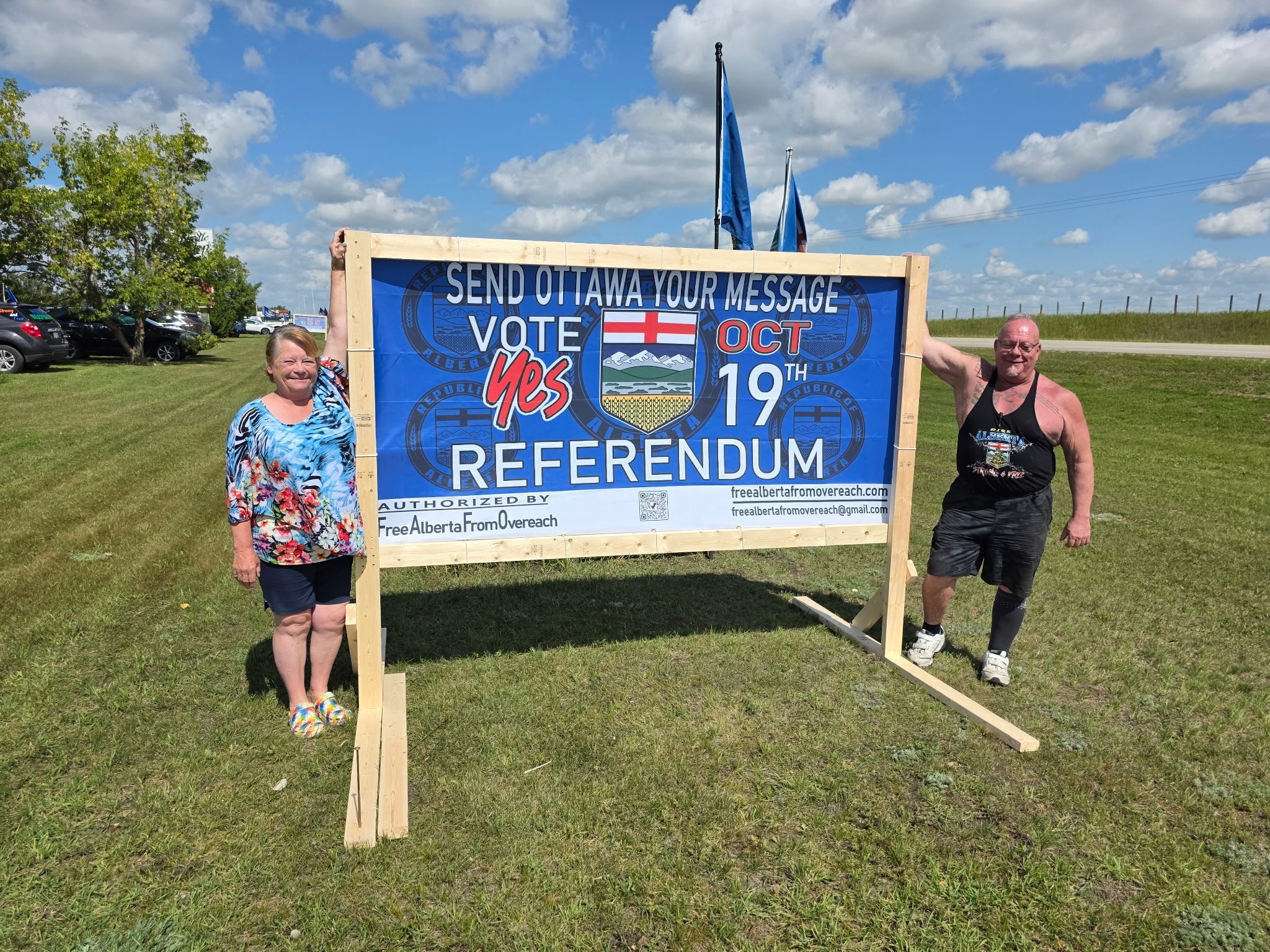
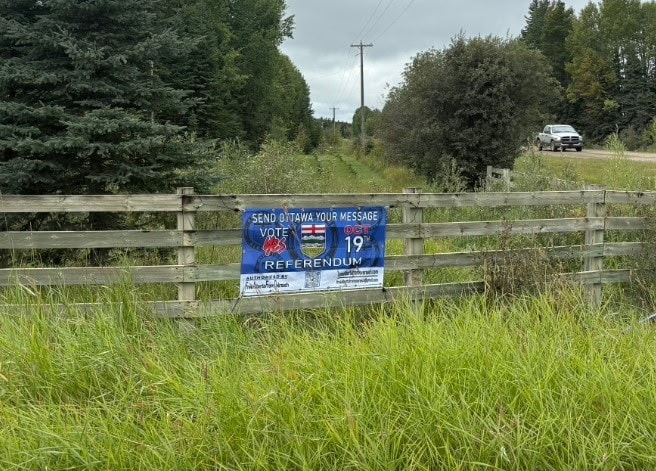
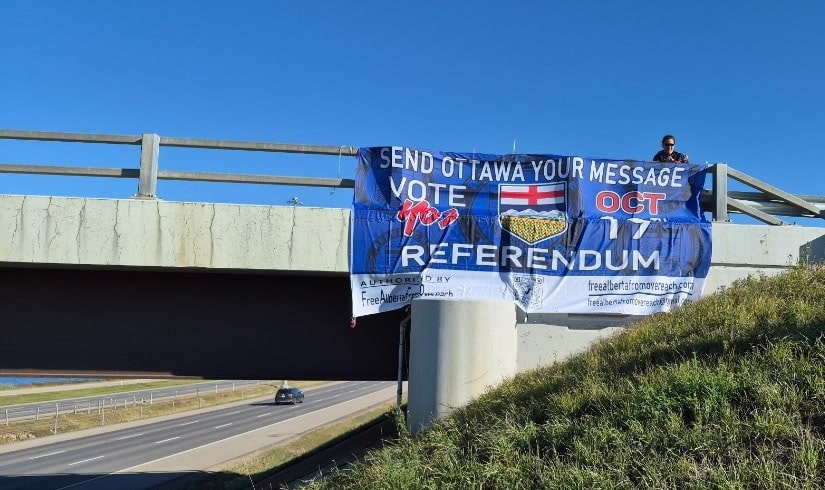
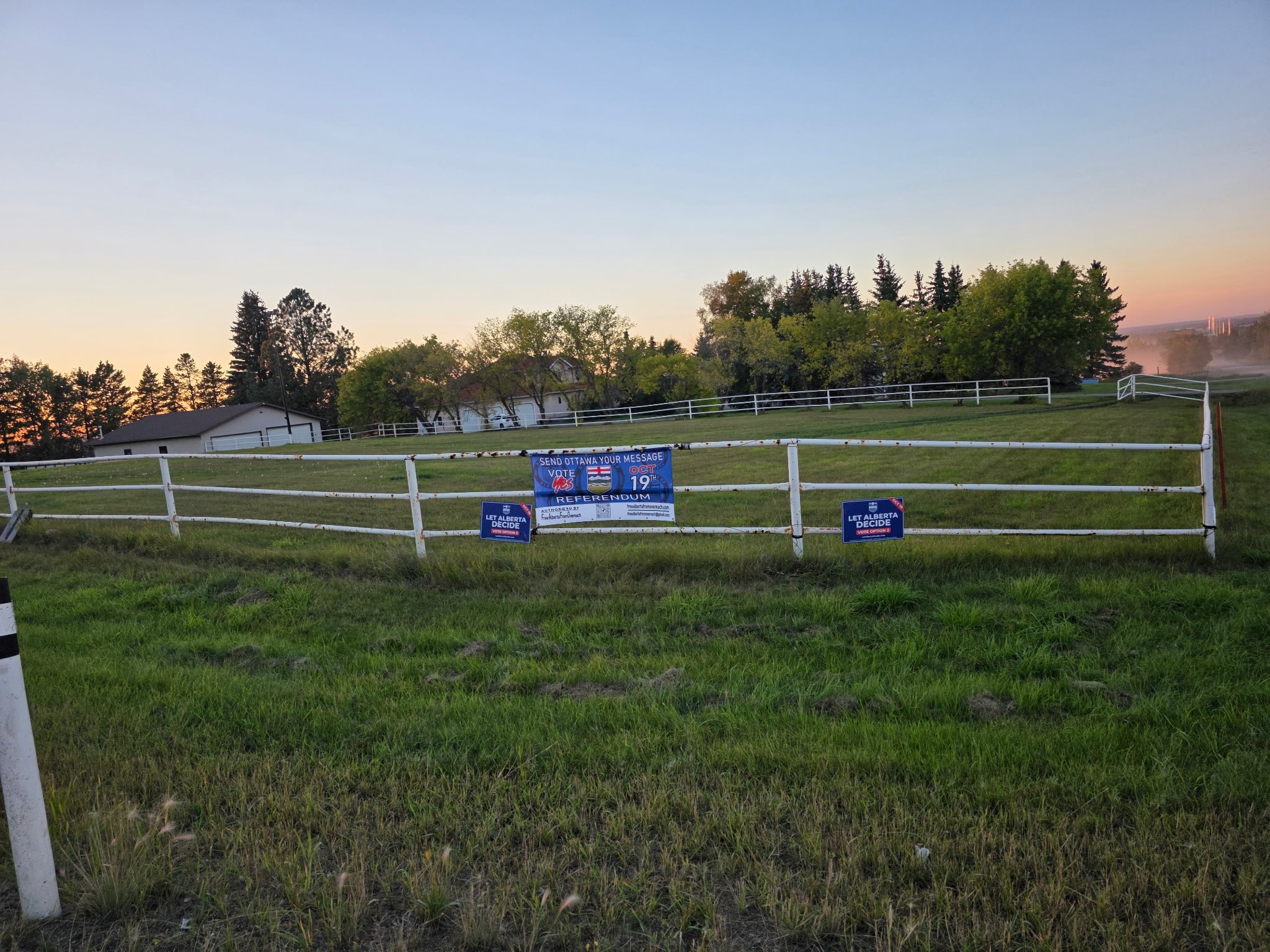
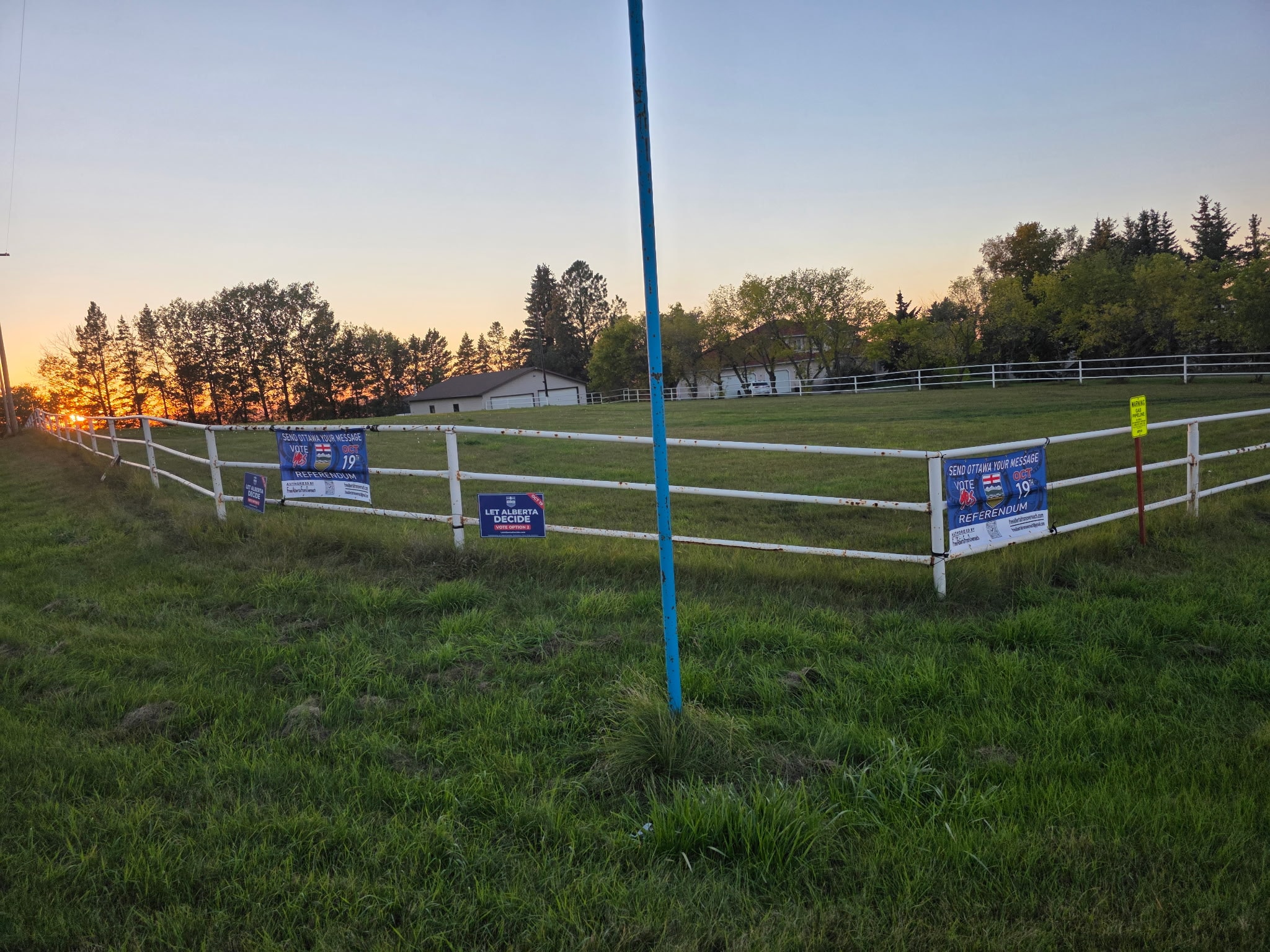
Adopt A Sign
Help spread the message across Alberta — one yard at a time.
For just $10.00 you adopt 2 signs and join a growing movement of Albertans standing up for their rights. Every adoption helps put more signs in the ground and keeps the message alive right across the province.
What You Get
- ✓1 sign to display in a meridian
- ✓1 free BBQ brush — a little thank-you from us
- ✓1 Independent Alberta pin to wear with pride
- ✓Your name listed below as an official Adopt A Sign member
Where Can I Put My Signs?
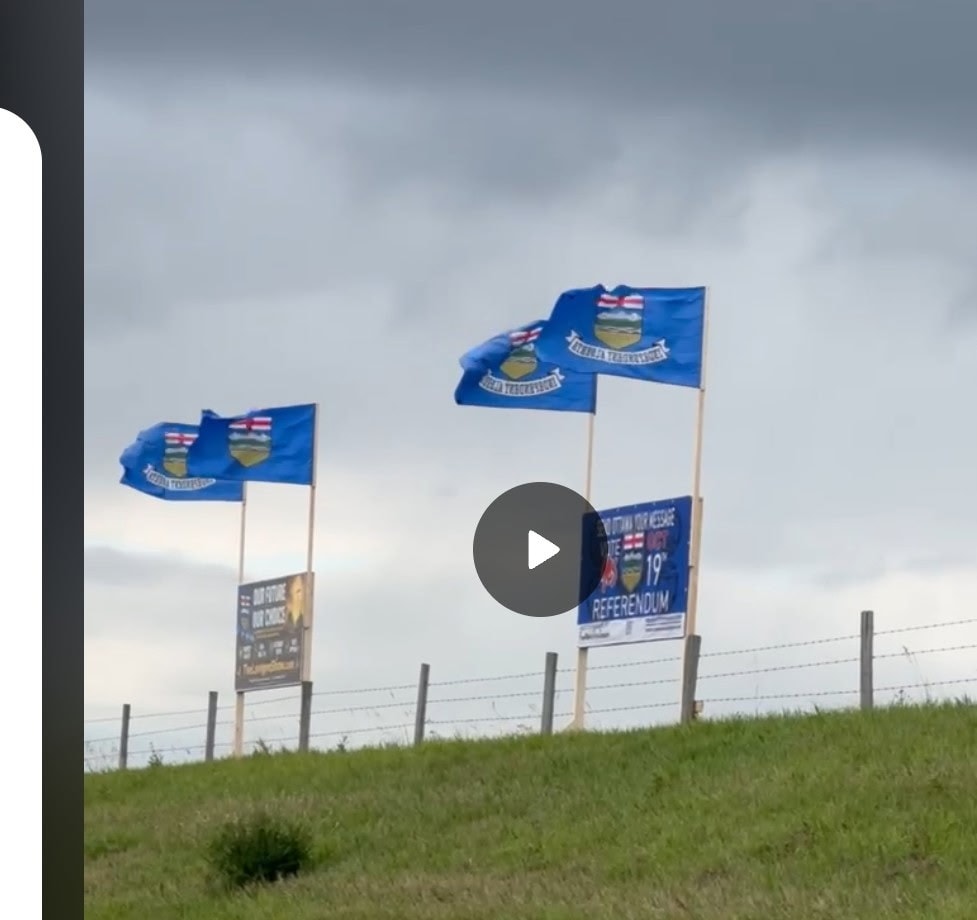
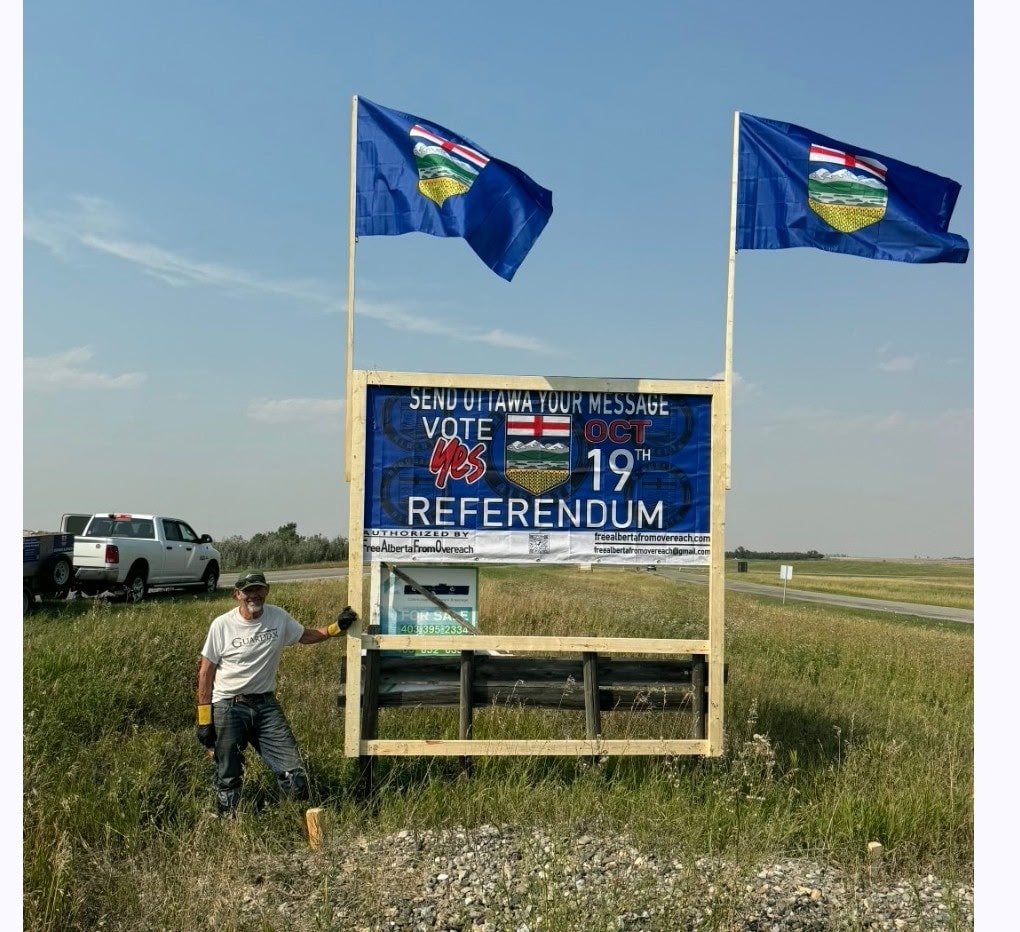
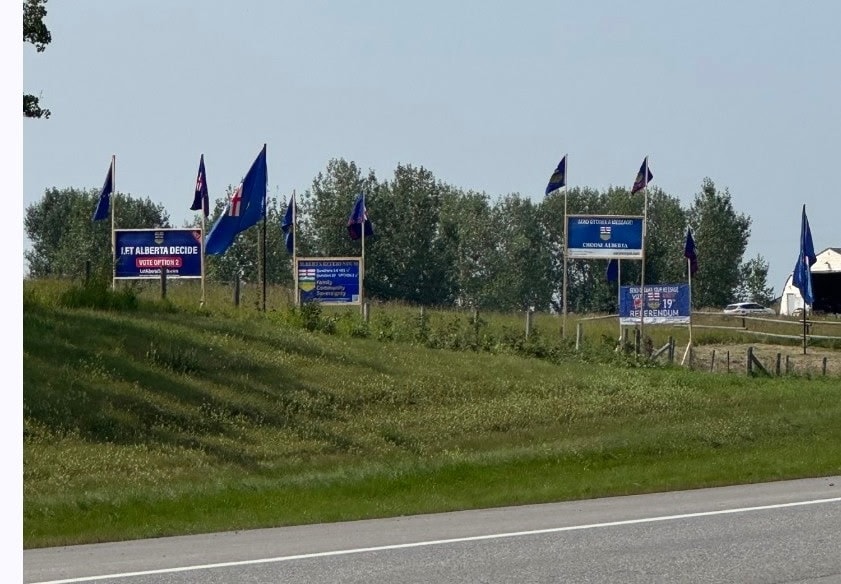
Signs can be placed on your own lawn, on meridians, and beside local roads — anywhere you want the message seen. The more visible, the better!
Want to be featured? Take a picture of yourself with your sign and send it to us — we'll post it in the gallery!
All We Ask
Keep an eye on your signs and take them back down when the campaign wraps up on October 19, 2026. That's it — simple as that.
Adopt A Sign Members
These Albertans have stepped up. Will you join them?








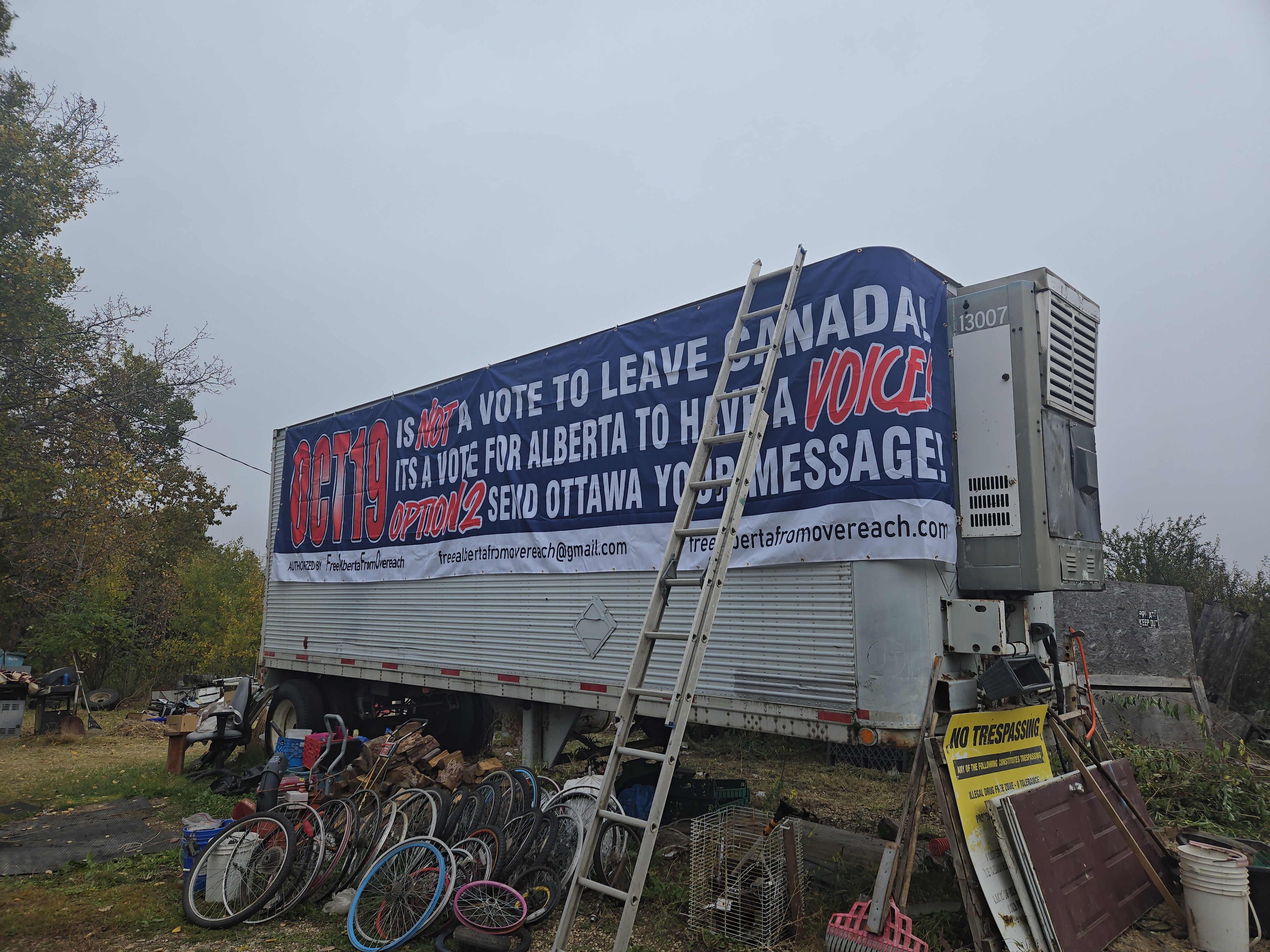




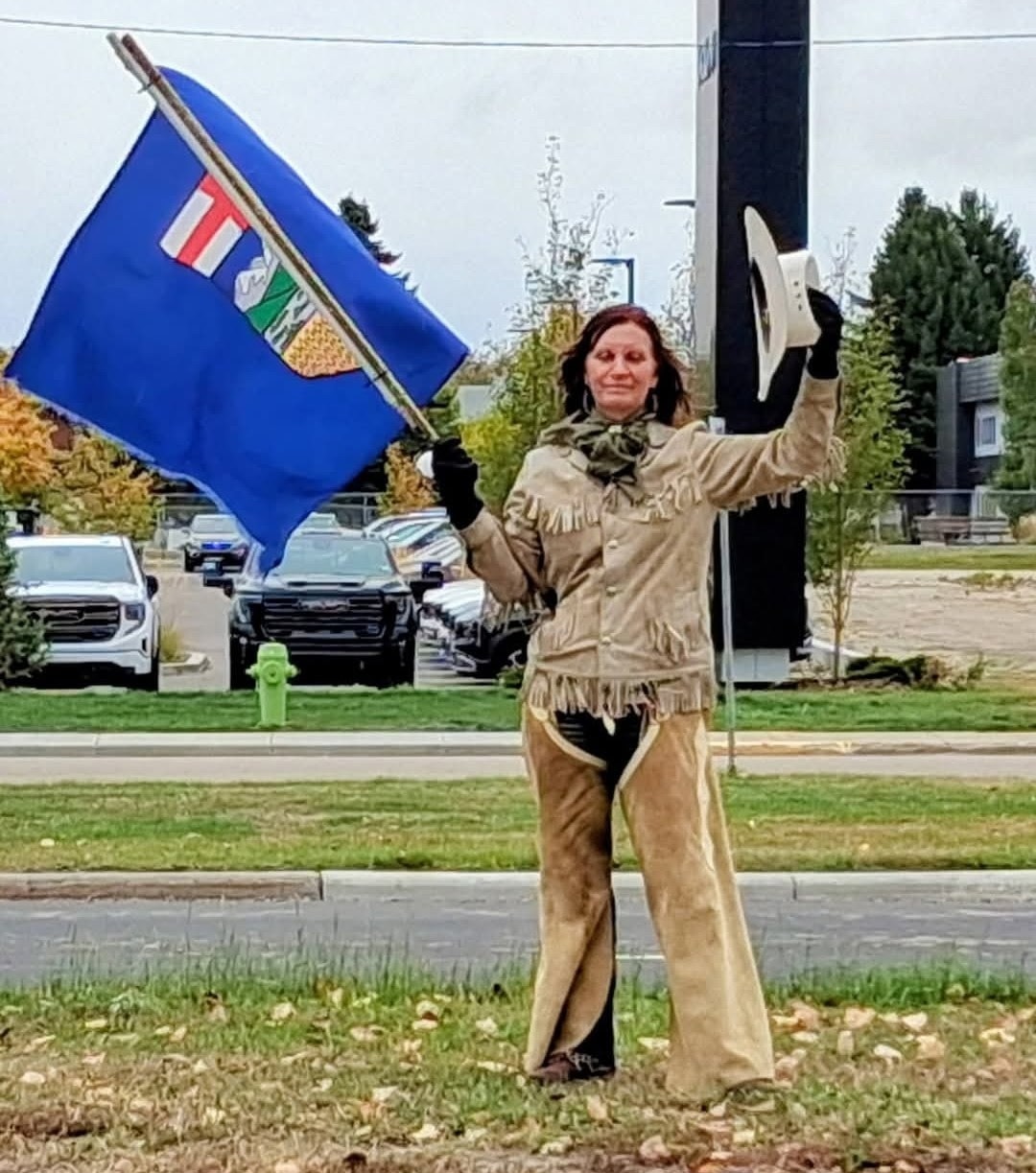

Community Event
Alberta Independence Garage Sale
100% of proceeds go directly to support your local Third Party Advertisers. Every purchase is a vote for Alberta's future.
Starts
September 12, 2026
Hours
Daily 11 AM – 7 PM
Runs Until
October 19, 2026
Proceeds
100% to local TPAs (Third Party Advertisers)
Item donations are welcome and greatly appreciated.
Supporting the Movement
Shop Cool Shit Wholesale
For every purchase over $200.00 before tax, Cool Shit Wholesale will donate $20.00 directly to local Third Party Advertisers.
Event Location
26746 Township Road 382, Red Deer County, Alberta, Canada
ABOUT FREE ALBERTA FROM OVERREACH
“Our mission is to advocate for the rights of Alberta residents and promote responsible governance.”
We work tirelessly to ensure transparency and accountability within the government, allowing all citizens to Stand Up for Freedom and contribute to a fair and just society.
DONATE
Invest in the Future of Free Alberta
Your support is essential in helping us stand up for freedom and fight for Alberta rights, allowing us to continue our mission and impact more lives.
Support Us

Get Involved
Upcoming Events
Rallies, town halls, and symposiums across Alberta. Show up, speak out, and stand with your fellow Albertans.
Alberta Independence Rally
Join thousands of Albertans calling for equalization reform and provincial sovereignty. Speakers, live music, and community.
Town Hall: Alberta's Path Forward
An open town hall discussion on Alberta's constitutional options, referendum strategy, and what independence would mean for families.
Equalization Reform Symposium
Policy experts, economists, and advocates gather to present solutions to the equalization formula that has cost Alberta hundreds of billions.
THE NUMBERS DON'T LIE
Alberta's Equalization Payment Breakdown
Alberta has contributed hundreds of billions of dollars to the federal equalization program while receiving nothing in return. It's time Albertans understood exactly where their money goes — and why it must stop.

Historical record
Alberta's struggle for autonomy predates Confederation — the fight for fairness is not new.
Alberta has paid into the federal equalization program for decades without receiving a single dollar back.
Despite being a net contributor for over 60 years, Alberta has never qualified to receive equalization payments.
Each Alberta resident effectively subsidizes the rest of Canada through federal fiscal transfers and equalization.
Quebec receives the lion's share of equalization despite having a lower unemployment rate than many recipient provinces.
Annual Breakdown
What Equalization Costs Every Albertan
Since 1957, Alberta has never received a single equalization dollar. The cumulative drain on Alberta's wealth — and what that money could have built — is staggering.
Every man, woman, and child in Alberta effectively sends over $8,000 annually to Ottawa through the equalization formula — with zero returned.
Alberta has contributed over $300 billion to equalization since the program began. Adjusted for inflation, the real figure exceeds $600 billion.
In the 2023–24 fiscal year alone, Alberta's net contribution to federal equalization and transfer programs exceeded $21 billion — more than the entire GDP of many provinces.
Despite being the largest per-capita contributor to Confederation, Alberta has received zero equalization payments in its entire history as a province.
What $300 Billion Could Have Built for Alberta
Instead of funding other provinces' programs, Alberta's equalization contributions could have transformed every corner of this province. Here is what that money represents in real terms.
World-Class Healthcare for Every Albertan
Enough to build 30 new state-of-the-art regional hospitals, fully fund Alberta Health Services for 15 years, eliminate surgical wait times, and establish a provincial pharmacare program covering every Albertan — with billions to spare.
Complete Provincial Infrastructure Overhaul
Enough to twin every major highway in Alberta, build a high-speed rail corridor from Calgary to Edmonton, replace every aging bridge and overpass, and fully fund rural broadband and utility infrastructure for the next 50 years.
Free Education from Kindergarten to University
Enough to eliminate all post-secondary tuition in Alberta for 40 years, fully fund K–12 education without any provincial tax revenue, build 500 new schools, and establish the best-funded trades and apprenticeship system in North America.
Alberta-Owned Energy Independence
Enough to build a provincially-owned natural gas export terminal, fund a sovereign Alberta energy company, develop next-generation SMR nuclear capacity, and establish a $20B Alberta Heritage Fund endowment generating returns for future generations.
Permanent Tax Elimination for Albertans
Enough to permanently eliminate the provincial income tax for every Albertan for over 20 years — putting thousands of dollars back in every family's pocket annually and making Alberta the most competitive jurisdiction in North America.
A Debt-Free Province with a Sovereign Wealth Fund
Enough to pay off Alberta's entire provincial debt, establish a $100B+ sovereign wealth fund modelled on Norway's Government Pension Fund, and guarantee every Albertan a prosperity dividend from resource revenues in perpetuity.
Alberta vs. Quebec: The Equalization Paradox
Quebec has received more equalization than any other province — while simultaneously having lower taxes, cheaper tuition, and more government services than Alberta. Albertans fund a lifestyle in Quebec that Albertans themselves cannot afford.
How Equalization Works — And Why It's Unfair
The Formula
The federal government calculates each province's "fiscal capacity" — its ability to raise revenue. Provinces below the national average receive payments. Alberta's oil and gas wealth inflates its fiscal capacity, making it a permanent donor.
No Opt-Out
Alberta cannot opt out of equalization. Federal income taxes collected from Albertans flow to Ottawa, which redistributes them to other provinces. Albertans have no say in how much is taken or where it goes.
The Quebec Paradox
Quebec receives over $14 billion annually while maintaining subsidized daycare, lower tuition, and higher social spending than Alberta — funded in large part by Alberta taxpayers.
The Referendum Path
In 2021, Albertans voted 61.7% in favour of removing natural resource revenue from the equalization formula. Ottawa ignored the result. A stronger mandate is needed to force change.
Demand Change
Alberta's wealth belongs to Albertans. Support our push for a fair deal — or no deal at all.
Support the Movement
Donate to Free Alberta From Overreach
Every dollar you contribute goes directly toward advocacy, legal challenges, and public education campaigns fighting for Alberta's rights. Your support makes this movement possible.
Donations Exceeding $50.00
All donations exceeding $50.00 must include your full name, mailing address, and phone number in the e-Transfer message field. This is required for our records and to issue a donation acknowledgement.
Select an amount
Clicking an amount opens your email app pre-filled with the donation details.
Send your e-Transfer to
Auto-deposit is enabled. Send any amount directly from your online banking using Interac e-Transfer.
Free Alberta From Overreach is a grassroots advocacy organization. Donations are not tax-deductible at this time.
Prefer PayPal?
Donate via PayPalOpen your online banking
Log in to your bank and navigate to Interac e-Transfer.
Add the recipient
Enter freealbertafromovereach@gmail.com as the recipient. Auto-deposit is enabled — no security question needed.
Enter your amount
Choose any amount. If donating more than $49.00, include your full name, mailing address, and phone number in the message field.
Send and confirm
Send the transfer. You will receive a confirmation from your bank. Thank you for standing with Alberta.
Federal policy & Alberta
Immigration Policy and Its Impact on Alberta
Over the past decade, Ottawa has dramatically accelerated immigration intake without meaningful consultation with provinces. Alberta has absorbed a disproportionate share of the consequences — straining housing, healthcare, wages, and public infrastructure — while receiving no additional federal transfers to offset the costs.
Canada admitted a record 1.5 million newcomers in 2023, the highest single-year intake in Canadian history.
Alberta's population grew from roughly 4.2 million in 2015 to nearly 5.0 million by 2026 — outpacing infrastructure investment.
Calgary and Edmonton saw some of the steepest rent increases in Canada, driven in part by rapid population growth outpacing housing supply.
Despite absorbing hundreds of thousands of newcomers, Alberta received no targeted federal funding to expand hospitals, clinics, or GP capacity.
Key Impacts on Alberta
Housing Affordability Crisis
Calgary and Edmonton ranked among the fastest-rising rental markets in Canada from 2022 to 2025. Vacancy rates fell below 2% in Calgary — a historic low. First-time Albertan buyers were priced out of markets their parents entered with ease, while Ottawa's immigration targets continued to climb without a corresponding national housing strategy.
Healthcare System Under Strain
Alberta Health Services reported record emergency department wait times and GP shortages from 2022 onward. The province added over 300,000 residents in three years yet received no proportional increase in the Canada Health Transfer. Rural Albertans faced clinic closures while urban centres struggled with overcrowded ERs.
Wage Suppression in Key Sectors
Rapid growth in the temporary foreign worker and international student programs expanded the low-wage labour pool in trades, hospitality, and retail. Economists at the University of Calgary documented downward pressure on entry-level wages in these sectors between 2019 and 2024, disproportionately affecting young Albertans entering the workforce.
Infrastructure Deficit
Schools, roads, transit, and water systems built for a smaller population were not upgraded at pace with growth. The City of Calgary identified a $3.7 billion infrastructure gap by 2025. Ottawa's infrastructure funding formulas, set years earlier, did not adjust for Alberta's accelerated growth rate.
No Provincial Voice in Federal Targets
Immigration is a federal jurisdiction. Alberta has no formal veto or binding consultation right over annual intake levels. The province can advocate — and has — but Ottawa sets the numbers unilaterally. Quebec, by contrast, negotiated the Canada–Quebec Accord in 1991, giving it near-exclusive control over its own selection and integration programs. Alberta has no equivalent agreement.
Fiscal Imbalance Deepened
Every new resident requires services — schools, hospitals, roads, policing. Provinces bear most of these costs. Yet the federal government collects income tax from new arrivals and retains the fiscal benefit while offloading service delivery to Alberta. This structural imbalance worsens with every record-breaking intake year.
A Decade of Escalating Intake
Alberta Deserves a Seat at the Table
Immigration is not the problem — unilateral federal policy made without provincial input is. Alberta must have a formal role in setting intake levels and receive adequate funding to serve every new resident. Contact us to add your voice.
Contact UsTHE CASE FOR ALBERTA
Privacy Violations & Judicial Overreach Against Alberta
The federal government has systematically undermined Alberta's constitutional rights — through invasive surveillance legislation, activist judicial appointments, and the weaponization of federal courts against Alberta's resource economy and democratic will.
Privacy & Surveillance Overreach
Bill C-26 — Mandatory Backdoor Access
Bill C-26 compels telecommunications providers to build surveillance backdoors into their networks at the federal government's direction — with no meaningful judicial oversight. Alberta businesses and residents are subject to warrantless monitoring under national security pretexts, with no provincial consent required.
RCMP Mass Data Collection
Federal RCMP units operating in Alberta have collected bulk metadata on Alberta residents without individual warrants, relying on sweeping national security exemptions. The Privacy Commissioner has repeatedly flagged these practices, yet Ottawa refuses to legislate binding limits.
Online Harms Act — Speech Surveillance
The Online Harms Act creates a federal Digital Safety Commission with broad powers to compel platforms to monitor and report user content. Albertans' online speech is subject to federal oversight with no provincial input — a direct intrusion into civil liberties that Alberta's government has formally opposed.
CRA Warrantless Data Sharing
The Canada Revenue Agency shares Albertans' financial data with foreign governments and federal agencies under bilateral agreements that bypass provincial privacy law. Alberta's Personal Information Protection Act (PIPA) is effectively nullified by federal override.
Smart Border & Biometric Surveillance
Federal biometric data collection at Alberta border crossings and airports — including facial recognition and travel pattern analysis — is conducted without provincial oversight. Data is retained indefinitely and shared with Five Eyes partners under agreements Albertans never consented to.
Bill C-11 — Content Monitoring Mandate
Bill C-11 grants the CRTC sweeping authority to regulate online content consumed by Albertans, including algorithmic manipulation of what Albertans see. This represents federal control over the information environment of an entire province — without democratic accountability to Alberta voters.
Judicial Overreach & Constitutional Violations
Impact Assessment Act — SCC Reference
In 2023, the Supreme Court of Canada ruled the federal Impact Assessment Act (Bill C-69) was largely unconstitutional — vindicating Alberta's position. Yet the federal government continues to use similar mechanisms to block Alberta energy projects, ignoring the spirit of the ruling and delaying billions in investment.
Carbon Tax — Forced on Alberta
The SCC upheld the federal carbon tax 6-3 in 2021, overriding Alberta's constitutional argument that natural resources fall under provincial jurisdiction. Three justices agreed with Alberta. The dissent noted the ruling fundamentally shifts the federal-provincial balance of power — a warning Ottawa ignored.
Judicial Appointments — No Alberta Voice
Federal judges who rule on Alberta resource and constitutional cases are appointed exclusively by the Prime Minister with no meaningful provincial input. The result is a judiciary that reflects central Canadian values and federal priorities — not Alberta's constitutional rights or economic interests.
Trans Mountain Injunctions — Federal Courts vs. Alberta
Federal courts have been used repeatedly to delay or block Alberta pipeline projects through injunctions brought by federally-funded environmental groups. Alberta has no equivalent mechanism to challenge federal spending that directly harms its economy.
Firearms Act — Provincial Jurisdiction Ignored
Alberta's Firearms Act, passed to assert provincial jurisdiction over firearms enforcement, has been challenged by the federal government in court. Ottawa argues federal paramountcy overrides Alberta's law — a position that, if upheld, would eliminate meaningful provincial autonomy over law enforcement priorities.
2021 Equalization Referendum — Result Ignored
61.7% of Albertans voted to remove natural resource revenue from the equalization formula. The federal government refused to negotiate. No court, no constitutional mechanism, and no political process exists to compel Ottawa to respect a provincial referendum result — exposing the fundamental democratic deficit Alberta faces within Confederation.
The Path to Independence
Alberta has exhausted every conventional avenue. The evidence is clear: within the current constitutional framework, Alberta cannot protect its resources, its privacy, or its democratic will. The path forward requires a fundamental renegotiation — or separation.
Alberta Sovereignty Act
Assert provincial jurisdiction over all matters within Alberta's borders — refusing to enforce unconstitutional federal legislation without provincial consent.
Provincial Police Force
Replace the RCMP with an Alberta Provincial Police force accountable to Albertans — ending federal surveillance and enforcement overreach on Alberta soil.
Alberta Pension Plan
Withdraw from CPP and establish the Alberta Pension Plan, retaining an estimated $53 billion in assets and reducing the flow of Alberta wealth to Ottawa.
Independence Referendum
If Ottawa refuses to negotiate a fair deal, Albertans must have the democratic right to vote on independence — and the result must be respected.
CONTACT US
Drop us a line!
Better yet, see us in person!
We love our customers and encourage everyone to visit during normal business hours as we stand up for freedom and support Alberta rights, striving to free Alberta from overreach.
Coolsh!t WholeSale
6750 52 Ave, Red Deer, AB T4N 4K8, Canada
Primary Contact: Rob Stewart
Hours
| Monday | 11am – 7pm |
| Tuesday | 11am – 7pm |
| Wednesday | 11am – 7pm |
| Thursday | 11am – 7pm |
| Friday | 11am – 7pm |
| Saturday | 11am – 6pm |
| Sunday | 12pm – 4pm |